
GUIDE
Non-US Freelancer With US Clients? ACH Works. Here's How
You don't need a US bank account to get paid like you have one. How ACH payouts work for contractors outside the US, step by step.
Reviewed by Rohan Sasne on Apr 2, 2026
SEPA, the Single Euro Payments Area, is a payment-integration initiative that lets people and businesses make euro-denominated cashless payments across the euro area and a number of other European countries and territories under common standards, so a cross-border euro payment works much like a domestic one.
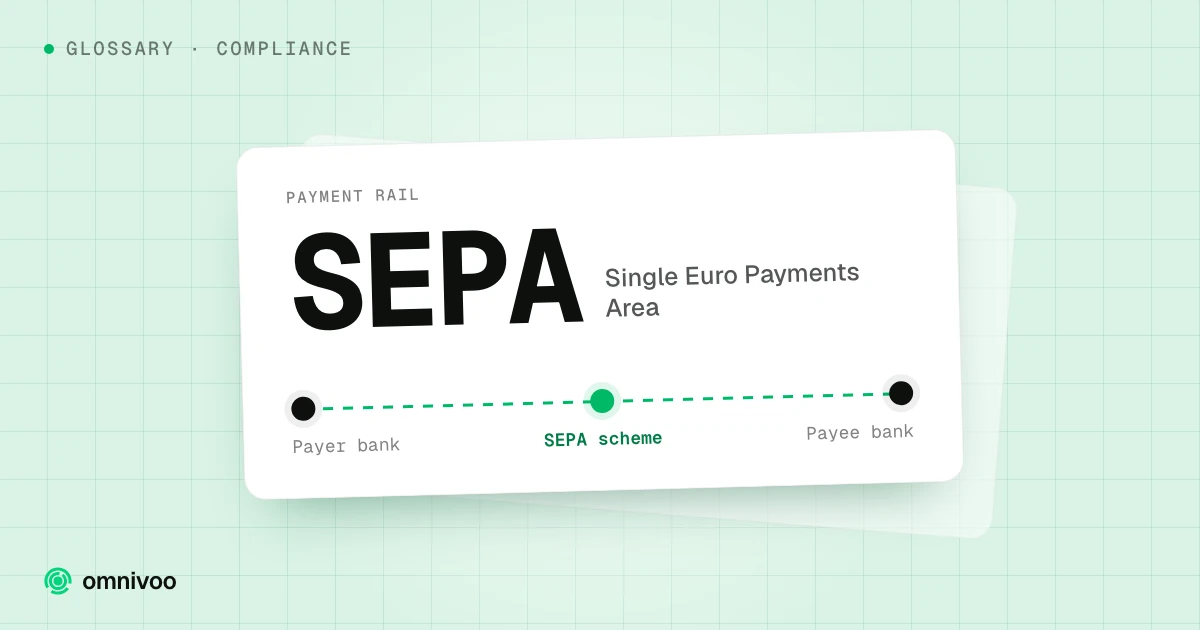
SEPA, the Single Euro Payments Area, is a payment-integration initiative that makes euro-denominated cashless payments work the same way across borders as they do at home. The European Central Bank describes SEPA as letting customers “make cashless euro payments to anywhere in the European Union, and to a number of non-EU countries, in a fast, safe and efficient way, just like within their own country.” The scheme is administered through standards set by the European Payments Council. The headline benefit is simple: a euro payment to another country in the area is treated like a domestic euro payment.
Before SEPA, sending euros across European borders meant slower, costlier cross-border processing than a domestic transfer. SEPA harmonizes the rules and technical standards so that distinction goes away for euro payments. The ECB notes that SEPA “eliminated differences between domestic and cross-border payments” by establishing common standards across participating countries.
SEPA covers a few core payment instruments:
For a company paying a contractor, the relevant instrument is almost always a SEPA credit transfer into the contractor’s euro account.
SEPA spans the euro-area countries plus a number of non-euro European countries and territories, including some that are outside the EU. The exact list of participants changes over time as countries and territories are added, so the right move is to confirm the current roster with the European Payments Council or the ECB rather than memorize a number. For day-to-day payments, the practical test is whether the contractor’s account is reachable for euro SEPA transfers, which it generally is for accounts held at banks in the area.
It helps to put SEPA next to the alternative. SEPA is a euro scheme within its participating area, built to make cross-border euro payments behave like domestic ones. The SWIFT network is a global messaging system banks use to instruct cross-border payments in many currencies, identified by a SWIFT/BIC code. In rough terms:
In the US domestic context, the closest conceptual cousin is the ACH network, which moves batched electronic payments between US bank accounts. SEPA plays a similar harmonizing role for euro payments across its area.
If you engage contractors in euro-using countries, SEPA is usually the most efficient way to get euros into their accounts. A US payer reaches it through a bank or payment provider that can originate or route a euro SEPA transfer, so the questions that matter are whether your provider supports SEPA and what the dollar-to-euro conversion costs on top of the transfer.
Omnivoo Contract Management handles cross-border contractor payments, including euro payouts to contractors in the SEPA area, so the company can pay in euros without standing up its own banking rails for each destination.
Compliant agreements, IP assignment, and audit-ready records in one place.
The Automated Clearing House is the batched US electronic funds-transfer network governed by Nacha rules, used for direct deposit of payroll, vendor and contractor payments, and consumer debits, with a Same Day ACH per-payment limit of $1 million effective March 18, 2022.
A SWIFT/BIC code (Business Identifier Code) is an 8 or 11 character alphanumeric identifier defined by the ISO 9362 standard that uniquely identifies a financial institution, its country, location, and optionally a specific branch for routing cross-border payment messages over the SWIFT network.
SWIFT is the global member-owned messaging cooperative that banks use to instruct cross-border payments, with cross-border interbank messaging migrated to the ISO 20022 MX format (pacs.008, pacs.009) on November 22, 2025 and legacy MT message formats retired.
An IBAN, or International Bank Account Number, is an internationally standardized identifier for a specific bank account, defined by ISO 13616. It is built from a two-letter country code, two check digits, and a country-specific basic bank account number, and it is widely required to route cross-border transfers in Europe and many other regions.
Stop worrying about Indian payroll and compliance terms. Omnivoo manages everything (PF, ESI, TDS, professional tax, and more).
Get startedFull details in our Terms of Service →