
PAYROLL
Leave Travel Allowance (LTA) in India: Rules, Tax Benefits, and Claims
LTA is not exempt under the new tax regime, only the old one. The Section 10(5) rules, the four-year block, what counts as travel, and how to claim it.
Reviewed by Amar Parab on Apr 18, 2026
Meal coupons (Sodexo, Zaggle, Zeta) are non-transferable food vouchers exempt as a perquisite under Rule 3(7)(iii); the per-meal limit was raised from Rs 50 to Rs 200 in the Income-Tax Rules, 2026.
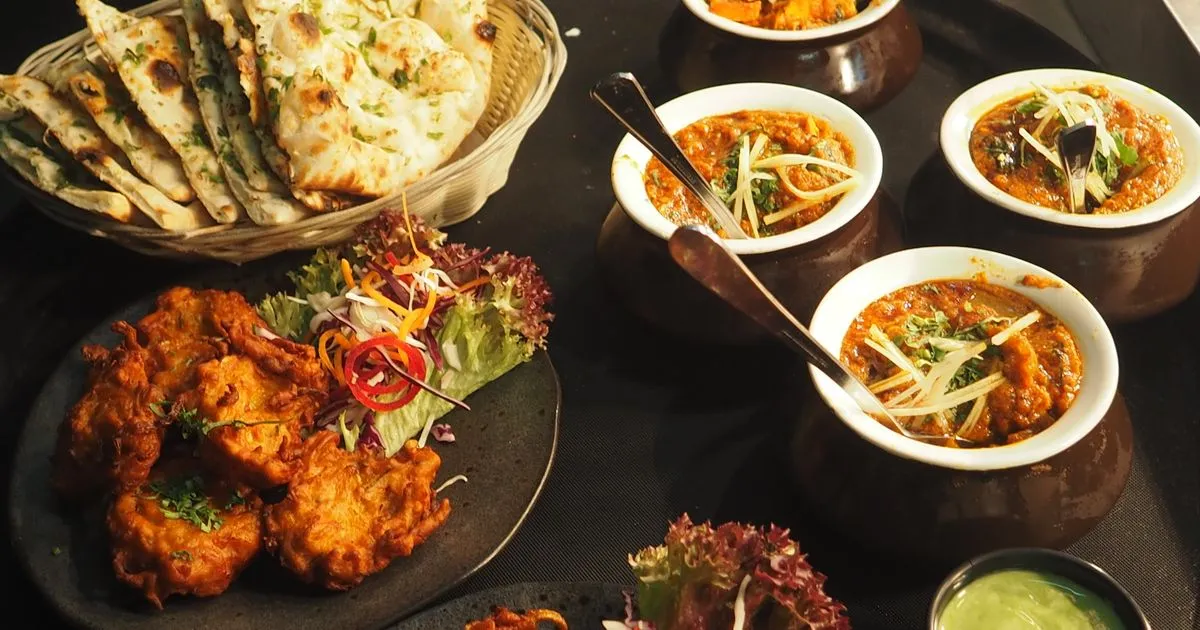
Meal coupons, sometimes called food coupons or food cards, are non-transferable, non-cashable vouchers issued by an employer to an employee for purchasing meals and non-alcoholic beverages at restaurants and food outlets. The most common providers in India are Sodexo Pluxee, Zaggle Save, Zeta and HungerBox, all of which operate as prepaid card or app-based wallets. The cards are linked to the individual employee, restricted to merchant categories tagged as eating joints, and cannot be used to withdraw cash.
Tax law treats employer-provided meals or paid meal vouchers as a perquisite under Section 17(2) of the Income Tax Act, 1961, valued under Rule 3(7)(iii) of the Income Tax Rules, 1962. As long as the voucher meets the qualifying conditions, non-transferable, usable only at eating joints, value within the per-meal cap, it is exempt from tax in the employee’s hands.
Cash “Food Allowance” paid as a fixed monthly amount, by contrast, is fully taxable salary just like Special Allowance. The exemption under Rule 3(7)(iii) is specifically for the voucher mechanism, not for cash paid in lieu.
Rule 3(7)(iii) historically valued meal vouchers at nil up to Rs 50 per meal. With effect from 1 April 2026, the Income-Tax Rules, 2026 increased this per-meal limit to Rs 200, quadrupling the tax-free benefit. The rule continues to require that:
The corresponding maximum annual exemption rises from approximately Rs 26,400 (Rs 50 × 2 meals × 22 working days × 12 months) to approximately Rs 1,05,600 (Rs 200 × 2 meals × 22 × 12). This makes meal coupons one of the most valuable tax-saving levers in salary structuring from FY 2026-27 onwards.
A second important change in the 2026 Rules is the removal of the earlier restriction that disallowed Rule 3(7)(iii) under the new tax regime. Until FY 2025-26, employees opting for Section 115BAC could not claim the meal voucher exemption, which meant Sodexo and similar cards had stopped making sense for the majority of salaried employees who default into the new regime. The 2026 Rules reportedly extend the benefit to both regimes, restoring meal vouchers as a universally efficient component.
Consider a Bangalore product manager on Rs 24,00,000 CTC, in the 30 percent income tax slab, restructuring Rs 8,800 per month from Special Allowance into meal coupons from FY 2026-27.
Before restructuring:
| Component | Monthly (Rs) | Annual (Rs) | Tax (Rs, at 30%) |
|---|---|---|---|
| Special Allowance | 8,800 | 1,05,600 | 31,680 |
After restructuring (Rs 200 × 2 meals × 22 days × 12 months meal coupons):
| Component | Monthly (Rs) | Annual (Rs) | Tax (Rs, at 30%) |
|---|---|---|---|
| Meal coupons (tax exempt) | 8,800 | 1,05,600 | 0 |
| Special Allowance | 0 | 0 | 0 |
| Annual tax saved | 31,680 |
Net take-home increases by roughly Rs 32,800 per year (including the marginal effect on cess), without any change in the employer’s CTC outflow. The employee gives up the flexibility to spend that money on anything other than food, but for most urban professionals who eat lunch out, the trade-off is comfortable.
The Income-Tax Rules, 2026 effective 1 April 2026 made two material changes to the meal coupon regime:
These changes align meal coupons with the broader policy direction of simplifying the new tax regime while making it materially more competitive against the old regime for salaried employees. Companies that had quietly retired meal coupons during the 2023-2025 period should reintroduce them for FY 2026-27.
For the broader picture of how meal coupons fit into Indian salary design, see Indian salary structures and CTC.
Omnivoo configures meal coupons as a CTC component during onboarding, integrates with major card providers for monthly top-ups, and applies the Rs 200 per meal cap under Rule 3(7)(iii) automatically. Top-up amounts are calculated from actual working days, perquisite values are reported at nil on Form 12BA, and the platform applies the 2026 exemption to both old and new regime employees from FY 2026-27 without any manual reconfiguration by HR.
Employ staff in India with no entity. PF, ESI, TDS, Professional Tax and Form 16 handled.
The new income tax regime in India (default since AY 2024-25) offers lower slab rates with reduced deductions, only Standard Deduction (₹75,000), employer NPS, and a few others apply.
The old income tax regime in India offers higher slab rates but allows over 70 deductions and exemptions including HRA, LTA, Section 80C, 80D, and home loan interest.
Section 16 of the Income Tax Act provides three salaried-income deductions: Standard Deduction (₹50,000 old / ₹75,000 new), Entertainment Allowance (govt only), and Professional Tax.
Section 17(2) of the Income Tax Act defines perquisites, non-cash employer benefits like rent-free housing, ESOPs, sweat equity and interest-free loans, that are taxable as salary.
Special Allowance is the residual, fully-taxable salary component in Indian CTC structures used to balance the package after fixing Basic, HRA and other allowances.
Full details in our Terms of Service →